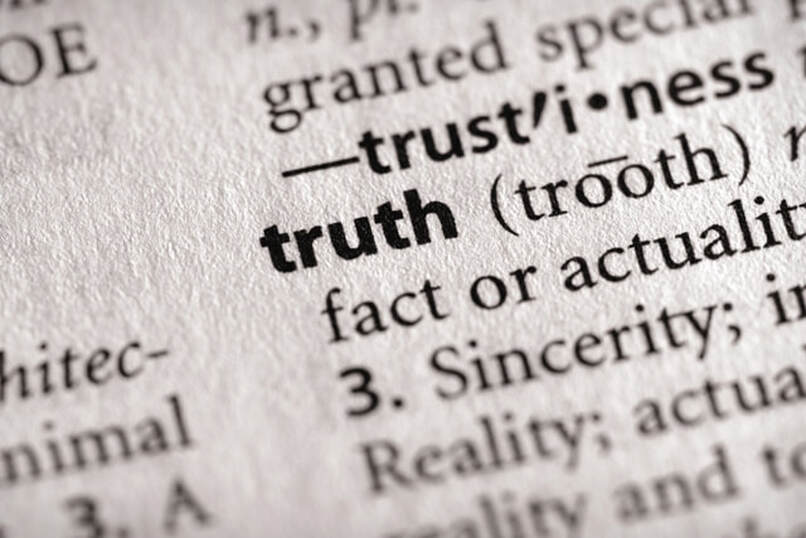
I recently witnessed a verbal altercation between two coworkers who are on very opposite ends of a significantly polarizing topic. Like most disagreements on this particular matter, things got a bit heated and personal. While I am not particularly close to either of these people, as the witness of the event, they both looked to me for endorsement. When I say it was an uncomfortable situation, I am grossly understating. The truth is, I do lean more to one side of the argument than the other. However, for a myriad of reasons, the least of which being that we were at work, I could not lend approval to either of them. I understood each of their sides, and I understood that this topic was important to each of them in very different ways. But I also understood that a) arguing about this would solve nothing, and b) no one in the situation actually had factual information to substantiate their deep rooted belief that they were right. Neither of these people were physically present to witness the topic at hand. They are operating off of third hand information that they read or saw on social media or the news, which was gathered from an investigator or representative who also was likely not present for the actual topic at hand. A press release turned into evening news, trimmed down into a 20 second reel with eye-catching headlines/captions. But despite both of these women knowing without any shadow of a doubt that they were not physically present to witness and vouch for the factual events up for discussion, they each fought with the conviction that what they knew was true. Now, one of them is right. But we (including the two of them) will never know which one.
This holds true for many of the convictions that we hold onto. We carry a jumbled up sack of things that we think we are right about, and we will fight for those things when someone else comes along and tells us that we are wrong. But what can we really claim to know for absolute certainty? Any event or conversation that we were not directly involved in or present to witness is hearsay. The retelling of it may hold some validity, but without first hand knowledge, there is no way to definitively know how much. So any opinion we have formed based on second hand knowledge will always be subject to discussion and debate. Because like you, someone else who wasn’t there to witness it, will have formed their own opinion based on second hand knowledge. Opinions cannot be proven or disproven. For the simple fact that to prove means to demonstrate the truth or existence of by evidence. As a second or third party participant, you can’t do that.
This situation set me to thinking about what a common and standard practice it is to take what we see and hear as truth. And how absolutely mind blowing it is that any of that last paragraph even had to be said. We have lost sight of what truth really is anymore. But not only have we lost sight of what truth is, we have lost sight of how we actually decipher what the truth is. I am just as guilty of this as anyone. Now more than ever. With the never-ending barrage of stimulation that comes through social media, internet, TV, AI, ads, radio and music, news, and even other people, we are set up to fall victim to misinformation. We take these things that we believe to be true, and we adapt them into our belief system. Suddenly we’re angry at this person or that one, this group, that country… and all b/c someone somewhere engineered a stream of well-crafted information. We believe that we are justified b/c our opinion is right and theirs is clearly wrong. Again, I am not exempt from guilt here. There are many people and things that I question often, finding difficulty in understanding how or why someone could/would feel that way. The truth is, I can never understand why, b/c I was not privy to the multitude of factors that makes any single person feel or think the way that they do. I was not in their mind as they grew up. As they learned right from wrong. Felt joy and loss. Were betrayed. Had examples set for them. I didn’t hear every word that was ever spoken to them or feel every feeling they had. I didn’t witness every neurologic bridge that was formed to lead to the complex set of characteristics and beliefs that makes them who they are. But you know who was? God. And He understands every single one of His children. So, we don’t need to. This is perhaps one of the more difficult concepts for us to grasp and implement as human beings. Resisting the urge to judge others for their actions, thoughts, beliefs or lack thereof. Ending the need to know why someone would or wouldn’t do/say/think/feel this or that.
Breaking this down into such simplistic concepts has helped me to reframe the ways I operate. Or at least, it has given me tools to help me start to. It’s pretty easy to stop my judgmental thoughts when I remind myself that I’m grossly unqualified to make them in the first place. When I remind myself that I will never be able to understand how a person became who they are. Half the time, I have trouble understanding how I even became who I am. Lord knows I can’t solve that riddle for anyone else. But it’s not my place, and it’s not my job to judge or find understanding in someone else’s choices or actions. It’s my job to accept that they are who they are by God’s divine grace and my only task is to love them anyway. Or at the very, absolute minimum, not hate them. After all, I’m not Jesus. But I can sure as hell try to be like Him.
 Unfettered Faith
Thoughts?